Nothing compares to the joy of seeing your little one take their first shaky step or utter their first word. But these small wins are not just adorable memories to be tucked away in the family album. They are signs of your child’s developmental milestones, which indicate how they are growing physically, mentally, socially and emotionally.
Long before they are ready to step into a preschool, your child is absorbing the world around them. Tracking these markers helps you understand their unique pace and nurture their true potential. Scroll down to learn why it is the right time to track your kid’s milestones and how you can do it.
How is Tracking Milestones Different from Comparing Your Child to Others?
Developmental milestones revolve around the small and expected skills children pick up as they grow. Tracking them simply means paying attention to this natural unfolding. Milestones represent flexible windows, not fixed deadlines, so comparing your child with others is not the same as tracking your kid.
One child might walk at 11 months and form full sentences much later. Another might do the reverse. Neither pace is wrong. What matters is the overall trajectory, the fact that skills keep building on each other.
This difference is what keeps tracking useful instead of stressful. It helps you tell the difference between normal variation. Before a child even steps into a pre primary school, tracking gives you a clear baseline. By understanding your kid’s progress, you prevent unnecessary worry while still catching red flags for early intervention.
Why Is It Important to Track These Milestones?
You know your child better than anyone else in the world. You see their daily quirks, their frustrations, and their hidden talents. Hence, tracking their milestones gives you a framework to trust your own instincts. When you monitor their growth, you are laying the groundwork for timely intervention if they ever need a little extra help.
Catching a delay early makes a big difference because it takes advantage of a young child’s naturally adaptable brain. Before letting worry take over, turn to dependable tools such as the CDC’s Learn the Signs. Act Early. program to empower yourself. It hands the agency back to parents, allowing you to act with confidence and celebrate the small wins.
Where Do These Milestones Show Up During a Normal Day?
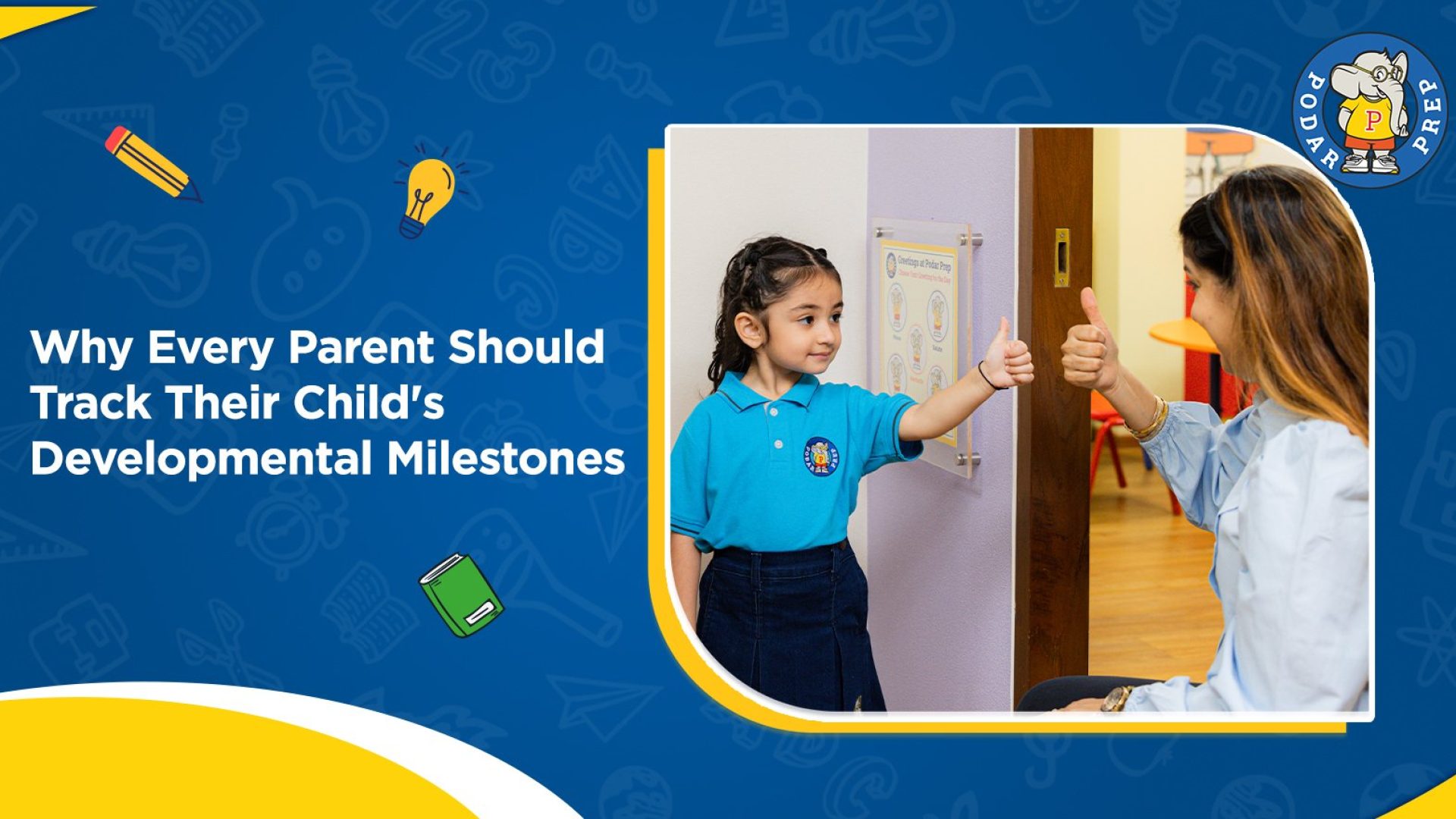
You can often see your child showing signs of achieving a developmental milestone on a random day or during any standard preschool day. Instead of looking at strict tables and checklists, try observing small details of these developmental markers in your everyday routines.
This natural observation is exactly how we structure our days at Podar Prep. Here’s how daily activities indicate a child’s growth:
| Everyday Moment | What It Reveals |
| Greeting Time | Confidence, willingness to connect, and emotional security |
| Play Explore Learn Time | Problem-solving, decision-making, and curiosity |
| Circle Time | Listening span, group awareness, and language use |
| Snack Time | Fine motor control, independence, and self-help skills |
| Reverence/Reflection Time | Memory recall, self-expression, and mindfulness |
How Parents and a Preschool Can Use These Observations
The next step is to take those insights and create an environment in which your child can thrive. At home, this means playing to their current strengths.
In a learning environment, it means partnering with educators who understand how to translate daily behaviours into tailored growth. A play school like Podar Prep, for instance, does not resort to traditional testing methods but rather uses continuous observation to promote the child’s unique path.
Our child-first curriculum includes:
- The Kiducation Philosophy: We view early learning through the child’s developmental lens rather than forcing them to meet a defined milestone checklist.
- Teachers as Brain Builders: Our educators observe behavioural and cognitive markers in real-time, completely skipping stressful and formal tests.
- Integrated Learning (TRIKONA): Programs like Symphonics (literacy), Number Magic, and Immersive S.P.A. naturally support and track milestones through engaging play.
Partner with Podar Prep For Your Child’s Learning Journey
Parenting during the early years often feels like constantly guessing if you are doing things right. But the good news is, you do not have to do this solo. Tracking development works best when your home and your child’s learning environment at a preschool work together to give them the best possible support.
At Podar Prep, we swap out generic parent-teacher updates for an actionable collaboration. Through targeted Kiducation Huddles, Portfolio Meets, and interactive HomePlay kits, we make sure you always know what your child’s daily behaviour is signalling. So, schedule a visit to your nearest Podar Prep centre or speak with our admissions team today.