It’s six in the evening, dinner is on the table, and your three-year-old is on the floor because the rice touched the dal. Or it’s drop-off time at the preschool, and a goodbye turns into tears that won’t stop. If any of this feels familiar, take a breath.
Scenes like this are completely normal and happen in homes everywhere. Big emotional reactions like these are a normal part of growing up at this age. This blog looks at what counts as normal behaviour for a young child, and which patterns are worth a closer look.
Why Do Emotional Outbursts Happen in Early Childhood?
To understand these outbursts, you must look at what happens inside a young child’s brain. The part responsible for impulse control and calming feelings, the prefrontal cortex, is still very much under construction during the play school years. In fact, it isn’t fully developed till a person is in their 20s or 30s.
So when frustration builds up, a young child doesn’t have the wiring yet to pause and think it through. The reaction comes first, and the words come later, if at all. Ongoing stress makes this harder still, since a young brain under pressure finds it tougher to settle down on its own.
Several everyday factors can easily push a child past their coping limit:
- Hunger, tiredness, or overstimulation
- Sudden transitions or changes in routine
- Being told “no” or asked to wait
- Not yet having the words to explain what they’re feeling
What is the Difference Between a Tantrum and an Emotional Outburst?
Parents often use the words “tantrum” and “outburst” as if they mean the same thing, but they usually point to different experiences and call for different responses. A tantrum is often about getting something, like a toy, a snack, or five more minutes before bath time. Your child stays somewhat aware of your reaction while it plays out.
A meltdown or emotional outburst looks different. There is often no single demand behind it, and once a child is in that state, redirecting them is much harder. Negotiation is of no help in this case, as they only need space, comfort, and time to reset.
What Does “Normal” Actually Look Like at This Age?
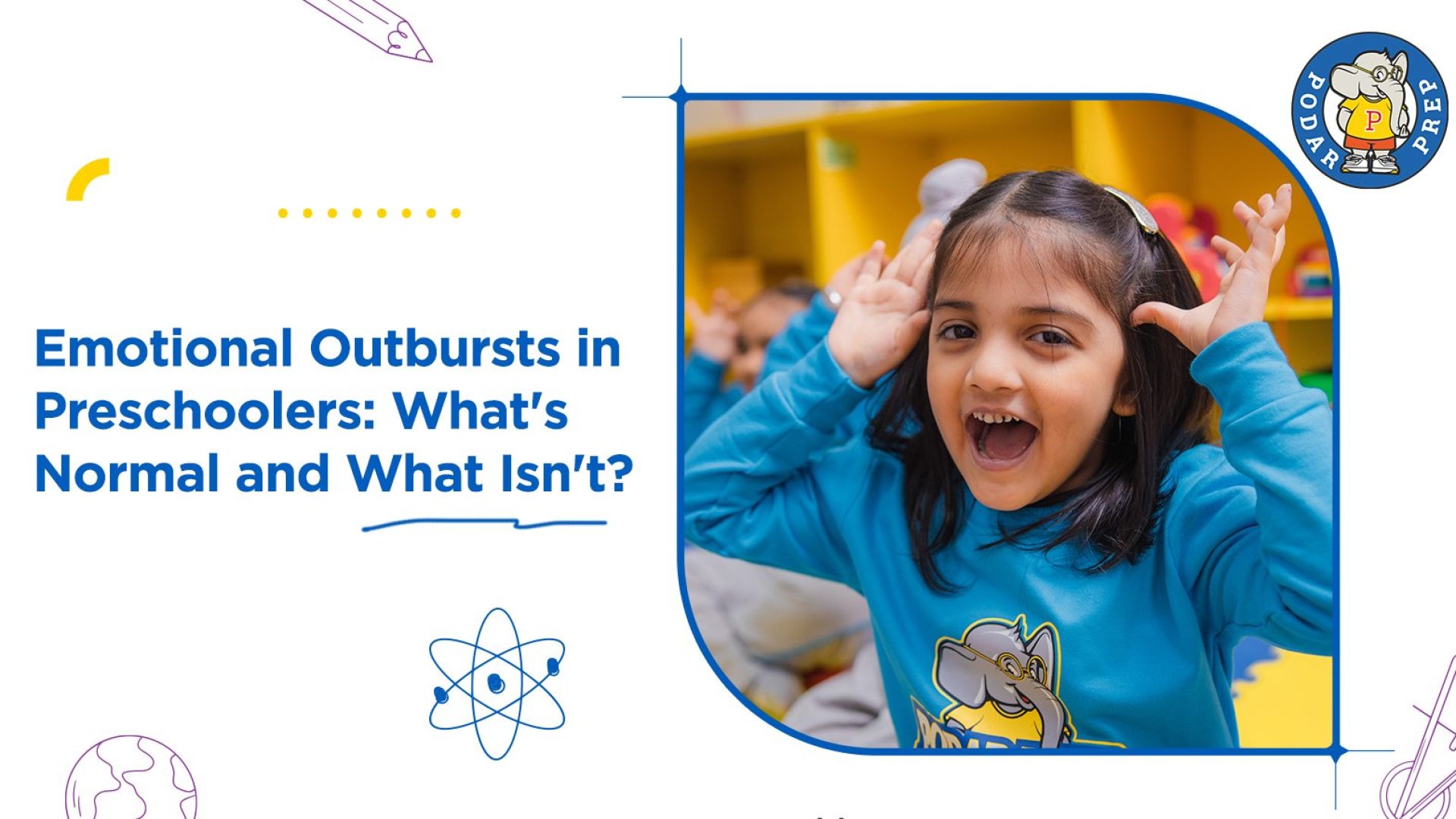
During the early years, expressing big feelings loudly is often how children communicate, and most outbursts settle within a few minutes once a child feels heard. Brief meltdowns like this are a standard, expected part of early childhood, not a sign that something is wrong.
Between the ages of 3-5, as children go through the preschool years, the number of tantrums drops off steadily as vocabulary grows. Children get better at naming what they are actually feeling. A child who once dropped to the floor in frustration may, a year later, simply say “I’m angry” instead.
When is an Outburst Not Normal?
While most outbursts do not need formal intervention, a few patterns are worth paying attention to. By recognising these signs, you can seek guidance.
If a child is still having difficulty controlling their body, they may need some extra help. Based on UNICEF’s guidance for recognising signs of distress, here’s what to watch out for:
- Outbursts lasting well past 15 minutes
- Aggression toward themselves or others
- Severe regression that does not ease
- Identical outbursts at home and school
How Can Teachers Help as Brain Builders?
Adults can help shape how that child’s brain learns to manage emotion. The National Curriculum Framework (NCF) 2022 points to a teacher’s voice, words, body language, and attitude as tools for guiding behaviour.
The best preschools, like Podar Prep, follow this through:
Appreciation Techniques to Support Self-Regulation
Star stickers and treats can push children to chase attention instead of progress, so Podar Prep teachers use a few appreciation techniques:
- Popcorn technique, encouraging one-word answers to build confidence in speaking up
- Magic Hats Off, to appreciate an activity done well
- Magic High Five, to build a child’s sense of accomplishment
Classroom Tools For Positive Behaviour
Structure helps young children feel secure. These are some of the ways Podar Prep classrooms help:
- Jumbo Sign Language, for non-verbal communication and building rapport
- HighScope’s conflict resolution steps, to guide problem-solving between children
- Simple door posters, like “Deposit your loud voice here,” to set clear expectations
Prepare Your Child for Emotional Wellbeing and Independence
Helping a child build emotional strength takes time, patience, and the right environment, and that’s exactly what the Kiducation philosophy at Podar Prep is built on. The Immersive S.P.A. programme focuses on children’s eight senses, including the interoceptive sense to help them to recognise signals such as hunger in order to build self-regulation.
As a parent, you can participate in Kiducation Huddles to keep home and school working in step with each other. Get in touch with us or visit our website to explore the admission process for preschool.