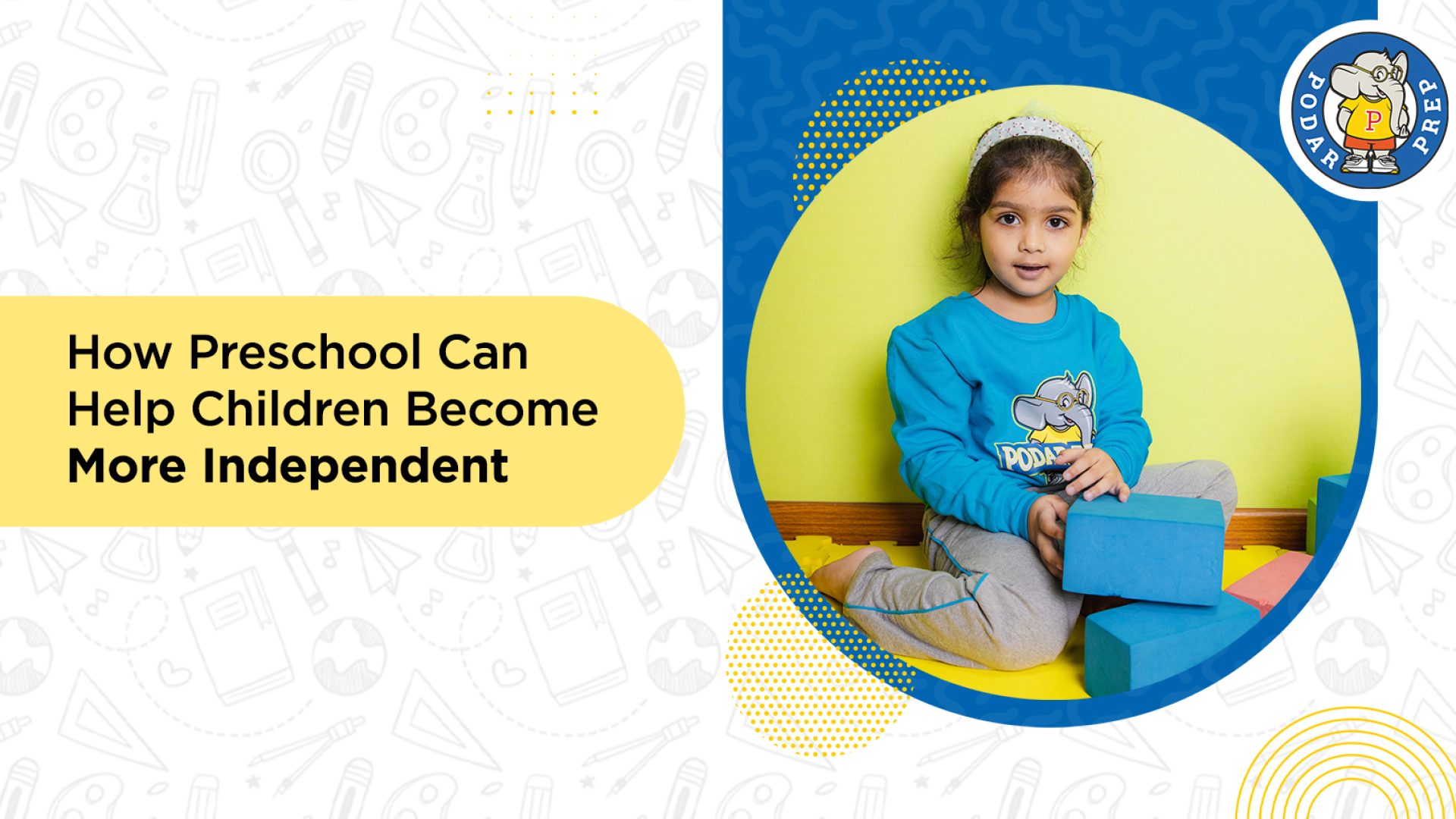
It is a busy morning and you are late. Your child stands at the door with one arm stuck in a jacket sleeve, waiting for you to finish the job. You step in and do it yourself because it is faster. But at preschool, that same child puts on the jacket, hangs up her bag and washes her hands, all without being asked.
So what changes between home and school? The answer is simple. Children can do more than we think. They just need a little time, a little space and an adult who is happy to wait while they try.
Why Is Early Independence Important for Brain Development?
Between the ages of 3 and 6, children naturally begin wanting to do things on their own. You will hear it in a firm little voice saying I can do it myself. This is not stubbornness. It is a healthy sign of growth, and it deserves encouragement rather than a hurried adult taking over.
These are the years when the brain grows at its fastest pace. Every small task a child completes on her own strengthens the connections they will later use for planning, problem solving and self-control.
Independence in children is emotional as much as it is physical. A child who can say “I need help” is being just as independent as the one who zips up their own jacket. Watch closely, and you will notice this growing independence in everyday moments:
- Carrying their own school bag.
- Choosing an activity and staying with it.
- Telling an adult what they need.
- Having a go before asking for help.
How Does a Child-Centric Environment Encourage Self-Reliance?
The space a child spends their day in works as a third teacher. When materials are easy to find, and there is room to move, children begin managing tasks on their own without being told to. A thoughtfully planned environment gives children several gentle nudges to take charge of their day.
A quick look at how a Podar Prep classroom differs from a traditional one:
| Traditional preschool | Podar Prep classrooms |
| Fixed seating arrangements | Flexible spaces where children move freely |
| Materials handed out by the teacher | Open learning corners children pick from |
| Little room to make mistakes | Emotionally safe spaces where mistakes are part of learning |
Which Everyday Routines Teach Children to Manage Themselves?
Most of this learning does not come from a special lesson. The self-reliance usually comes from the ordinary parts of the day. This is where preschool learning gradually does its job.
Routines Children Can Manage on Their Own
At Podar Prep, daily routines are treated as teaching. Children pack and organise their belongings, wash their hands before meals, tidy up after activities and care for classroom materials. Each of these tasks is small, yet each one tells a child that they are trusted to look after themselves and their surroundings.
Here is how a few ordinary moments in the Podar Prep day give children something to practise:
| Part of the day | What the child practises |
| Greeting Time | Choosing how they wish to be greeted |
| Play Explore Learn Time | Picking their own activity and materials |
| Snack Time | Serving themselves, hygiene and table manners |
| Transitions | Following a visual timetable without prompting |
| Reverence Time | Reflecting on what they enjoyed and learnt |
A Classroom Children Can Reach and Read
At Podar Prep, the classroom itself is set up to make this possible.
- Learning materials are kept within reach, so children can choose them and return them on their own.
- Doors, windows, shelves and learning centres are clearly labelled.
- Personalised bag hooks and name labels give every child a space of their own.
- There are no chairs in Playgroup and Nursery, so children move about freely instead of waiting to be seated.
How Do Teachers Encourage Children to Try Things on Their Own?
A 2025 review paper found that when teachers take an unobtrusive role during child-led play, children get the chance to exercise autonomy in a safe environment. This strengthens their social and emotional skills.
Teachers Who Guide and Observe
Teachers at Podar Prep are called Brain Builders, and their first job is to observe. Help is offered only where it is needed, because this patient approach is how life skills for kids slowly take root. You can see it in a few ways:
- Behaviour is guided through the Golden Values of the Class, visual timetables and Jumbo Sign Language.
- Shy or hesitant children are never forced to participate, and confidence is built up gradually.
- Small conflicts are talked through, so children learn to resolve disagreements themselves.
Activities Where Children Decide the Next Step
Many Podar Prep activities are designed so the child decides what happens next instead of the adult. These are:
- Action Mats, where a child reads a visual cue, works out the action and carries it out without waiting for instructions.
- Non-screen coding with Froebel Gifts, where children build on their coding skills while also strengthening their foundational literacy and numeracy skills as per Nipun Bharat.
- Immersive S.P.A. (Sensory Play Activities) sessions, where children explore through their 8 senses!
- Learning Strategies like Four Corners, Outside Jump Inside Jump and Pass the Mic, which invite every child to form and voice an opinion.
Watch Your Child Grow Into a Confident Learner at Podar Prep Preschool!
At Podar Prep, the Kiducation philosophy looks at everything from a child’s perspective, and independence grows naturally in a place built that way. Children here are given real choices and unhurried routines, with teachers who know when to wait. Over time, you will notice the difference at home too. Your child hangs up her own bag, settles into the morning and asks for help only when she truly needs it.
If this is the preschool start you want for your little one, visit our website today and fill out the inquiry form for admission at Podar Prep!